Circular Economy
From flakes to pellets, and checking every lot
Sorted, washed flakes are not yet a raw material a converter can run. They still have to be melted, degassed, filtered, pelletised and blended into one lot, then tested before shipping. This article explains what each step does, why it is there, and what to test on every lot.
Marketing Department, Advanced Chem Solutions · 22 October 2026 · about 9 min read
The line at a glance
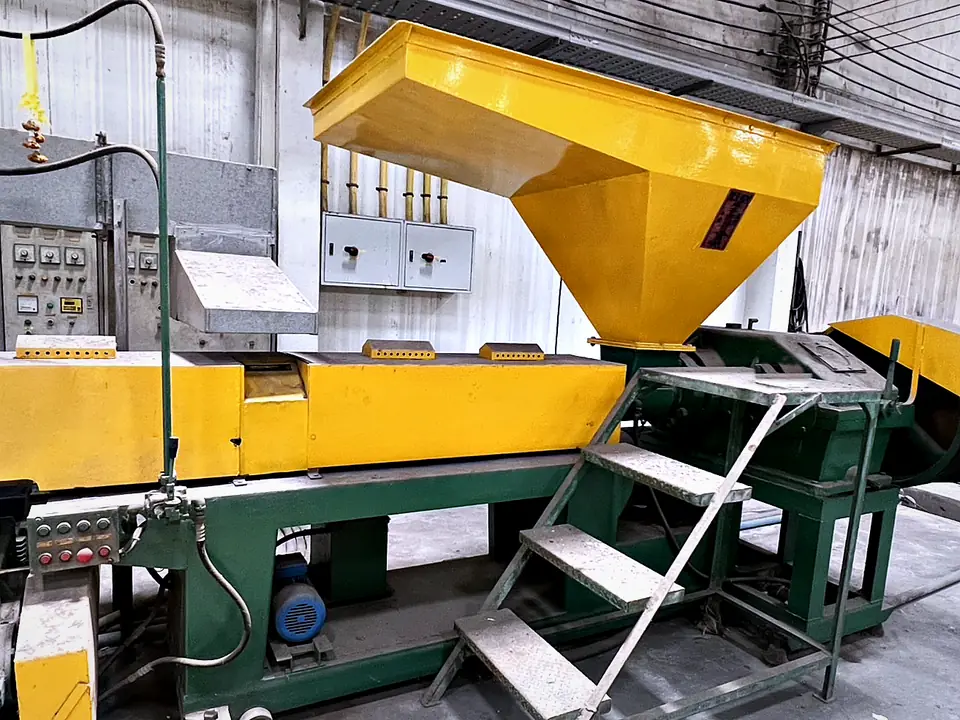
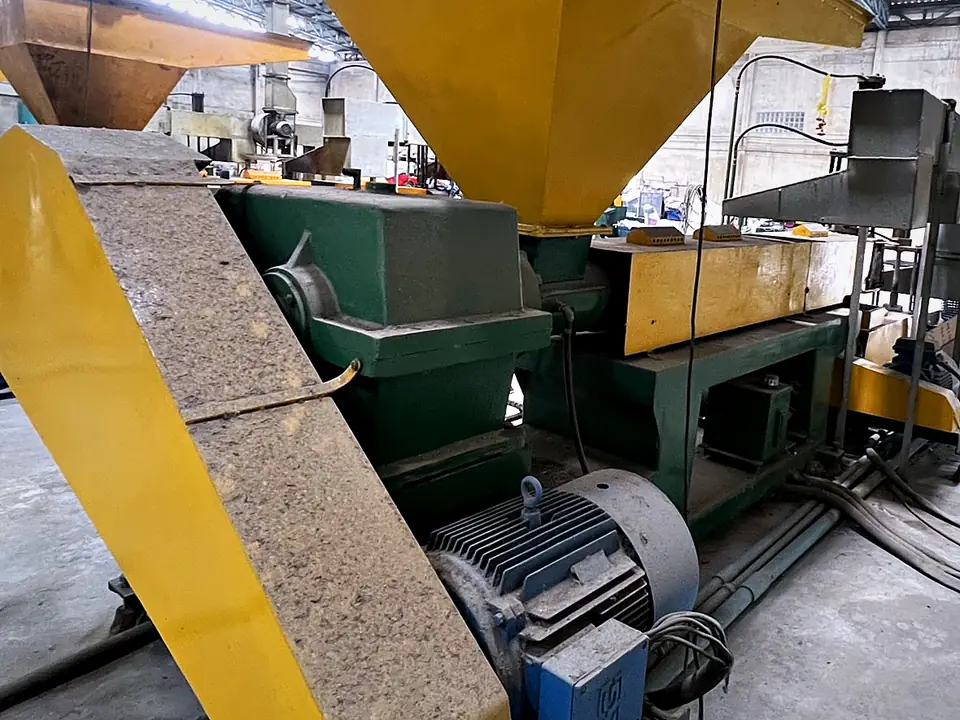
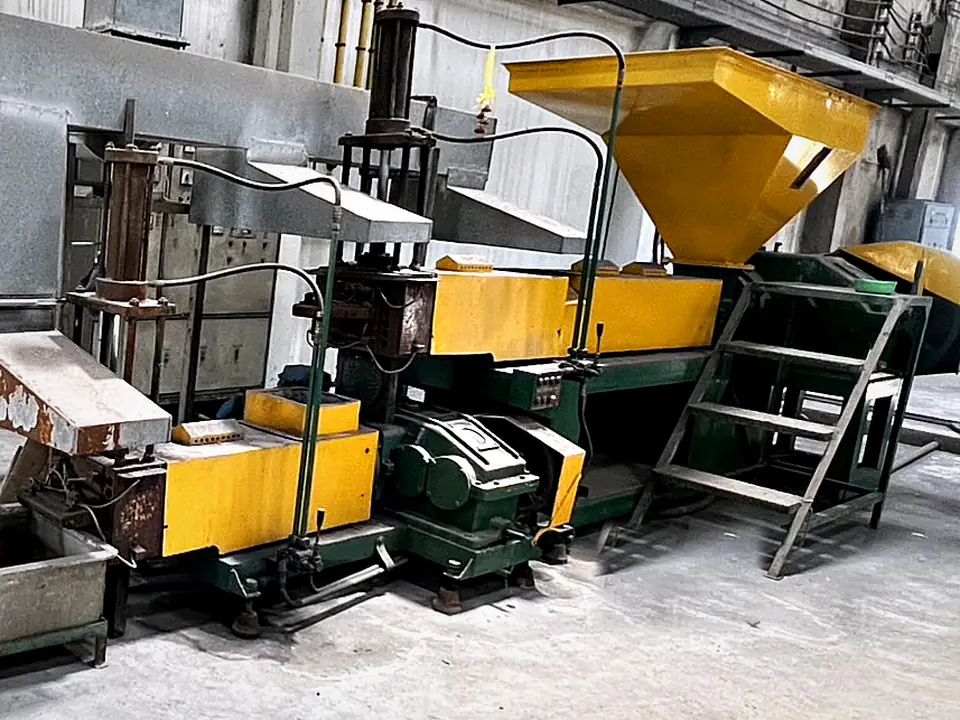
Most mechanical recycling lines are extruders built for an uneven feed. The principle is the same as any extruder (see Extrusion), with three additions: a vacuum vent for degassing, a melt filter that can change screens while running, and a homogenising silo after the pelletiser.
- Feed and compact light, fluffy flakes or film are densified before they reach the screw
- Melt the screw melts and mixes the material and takes in additives according to the formulation
- Degas a vent connected to a vacuum pump draws off moisture and volatiles
- Filter screens catch paper, aluminium, wood, rubber and unmelted plastics
- Pelletise the melt leaves the die plate, is cut into pellets and cooled
- Dry and homogenise water is removed and pellets are blended in a silo so the whole lot shares one average
- Test, pack, document retain a sample, label the lot number and issue a Certificate of Analysis (CoA)
Feeding and compacting flakes
Virgin pellets flow into a screw on their own. Bottle flakes, film scrap and ground injection scrap have a low bulk density and irregular shapes. Dropped straight into a hopper, they feed unevenly, so output and pressure fluctuate, and that shows up later as MFI and pellet-size variation.
- Force feeder or crammer a screw or agitator in the hopper pushes flakes into the feed throat; suits rigid flakes that bridge
- Cutter-compactor a vessel with rotating knives that cuts and densifies film or fibre; frictional heat pre-warms the material and drives off some surface moisture
- Gravimetric feeder doses additives or masterbatch at the ratio set in the formulation
Even flake size and low surface moisture keep this step stable, which is why they must be controlled at grinding and washing rather than corrected at the extruder.
Melting and vacuum degassing
Once the material is molten, one section of the screw is designed so that pressure drops almost to zero. The channel runs partly empty and the melt spreads into a thin layer with a large free surface. A vent there is connected to a vacuum pump, so moisture and volatiles can escape easily.
- Moisture water left from washing turns to steam; if it is not removed it leaves voids in the pellets and splay on the moulded part
- Volatiles and odour ink solvents, degradation products and organics absorbed during the first life are partly removed
- Gases from contaminants such as burnt paper or adhesive; degassing reduces bubbles but does not remove the contaminant itself, which still has to be filtered
Lines that take heavily printed or strongly smelling material often have more than one vent. A typical problem is vent flooding, where melt rises into the vent because the feed rate or viscosity does not suit the screw design. The point to remember: degassing reduces odour but does not erase it in one pass. Good sorting and washing matter more.
Melt filtration
Anything that cannot melt, such as paper, aluminium, wood, rubber, sand and higher-melting plastics (for example PET or PA in a PP stream), must be stopped before the die. Otherwise it ends up as black specks, gels, holes in film or weak points where parts crack. Finer filtration means fewer specks, but also higher pressure, faster screen blinding and more melt lost with the rejected material, so the fineness has to match the end application.
| Filter type | How it works | Suits | Watch out for |
|---|---|---|---|
| Slide-plate screen changer | A fresh screen slides in to replace the blocked one | Fairly clean feed such as PIR | Pressure and flow jump during the change; a short run of off-spec pellets is possible |
| Continuous (piston or rotary) | Several screen cavities, changed one at a time without stopping flow; some types backflush | PCR with moderate contamination | Steadier pressure, but screens still need changing or cleaning on schedule |
| Laser filter or self-cleaning melt filter | A finely drilled filter plate; a scraper wipes contaminants off the surface and discharges them continuously | Heavily contaminated feed such as post-consumer film | Long run times, but more complex, and some melt leaves with the contaminants |
A good indicator is the pressure before the screen. If it rises faster than usual, that lot of feed is dirtier than normal, and it is worth recording against the lot number.
Three ways to pelletise
| Method | How it works | Strengths | Limitations |
|---|---|---|---|
| Strand pelletising | Melt leaves the die as strands, runs through a water bath and into a cutter | Simple, low investment, easy grade changes | Strands break when the melt is contaminated or has low melt strength; needs operator attention; cylindrical pellets |
| Water-ring pelletising | Knives cut at the die face and throw pellets into a rotating ring of water | Compact, no strand breaks; common for PE and PP | Not suited to very low-viscosity or sticky melts; pellets can stick together if cooling is short |
| Underwater pelletising | Cutting at a die face submerged in circulating water | Uniform round pellets; handles many polymers and high throughput | Higher investment and upkeep; start-up needs care; die holes can freeze off |
Pellet size and shape matter to the customer. Recycled pellets that differ a lot in size from virgin pellets segregate in the hopper and make feeding unstable on the customer's moulding machine or extruder.
Homogenising, drying and packing
Even with well-sorted feed, pellet properties drift with the hours of production, because each bag of flakes comes from a different source. The usual answer is to collect several hours of production in a homogenising silo and circulate it until the whole silo shares one average. The silo then becomes one lot, and one set of test results genuinely represents it.
- Drying after water pelletising, a centrifugal dryer removes surface water; filled grades or moisture-sensitive polymers may need further drying
- Screening removes twins, long pellets and fines
- Packing in moisture-proof bags or big bags; every bag carries the same lot number as its test results
Lot numbers, retain samples and CoA
Documentation is what makes recycled pellets traceable. The minimum worth having:
- Lot number one number per homogenised lot, linked to production date, feed source, formulation and machine records such as screen pressure
- Retain sample kept from every lot for the period agreed with the customer, to be retested if there is a complaint
- Certificate of Analysis (CoA) shows the lot number, the items tested, test methods, measured values and the acceptance range from the specification
What to test on each lot
Not every item needs testing on every lot. Items that change quickly and directly affect the customer's machine (MFI, moisture, colour, specks) are usually tested on every lot; the rest periodically or when the feed source changes. All of this belongs in the specification.
| Property | Method | Why it matters |
|---|---|---|
| MFI / MFR | ISO 1133 (PP commonly 230 °C / 2.16 kg · PE commonly 190 °C / 2.16 kg) | Tells you whether the pellets will flow on the customer's machine like the last lot. An unusually high MFI often means chain scission from heat or service life |
| Density | ISO 1183 | Points to filler content and foreign polymers, such as PE in PP or polymers heavier than water |
| Ash | ISO 3451 | Inorganic residue after burning: talc, CaCO3, pigment, soil and sand; affects stiffness, density and surface |
| Moisture | Weight loss on heating, or Karl Fischer, as agreed | Causes voids and splay and speeds up degradation of some polymers |
| DSC (melting peaks) | ISO 11357 | Separate melting peaks reveal polymer contamination, such as PE in PP (PE melts at about 105–135 °C, PP homopolymer at about 160–165 °C), or PET and PA |
| OIT | ISO 11357-6 | Shows how much stabiliser is left. Low OIT means the pellets may degrade in the next processing step or in service, and guides how much stabiliser to add |
| Impact | ISO 179 (Charpy) or ISO 180 (Izod) | Catches brittleness from degradation or from incompatible PE/PP blends, which MFI alone cannot see |
| Colour L*a*b* | Spectrophotometer against a reference lot (ΔE) | Recycled pellets tend towards grey or yellow; lot-to-lot colour shifts force the customer to re-adjust colour masterbatch each time |
| Odour | Odour panel using an agreed method (for example VDA 270 in automotive) | Odour is a top PCR complaint and ordinary instruments cannot measure it |
| Gels and black specks | Test film or pressed plaque; count per area by size class | Shows how well filtration works and how clean the feed is; critical for film and glossy parts |
Testing is done at a partner or external lab, or at the customer's QC, depending on the item and what has been agreed. Acceptance limits for each item are agreed in writing with each customer, because different parts need different ranges. A black agricultural crate and a light-coloured packaging cap should not share one specification.
What ACS controls
Circular grades are made in ACS's own plant (up to 3,000 t/year, being expanded) and are co-developed with customers. PCR and rPP compounds carry the Pure Earth brand. Other products are made with a network of partner compounders to ACS-designed formulations. There is no minimum production quantity.
- Incoming material specs and lot acceptance criteria, agreed with the customer in writing
- Formulation: stabilisers, compatibilisers, desiccants or odour absorbers, chosen for the problems of that particular feed
- Lot numbering, retain samples and a CoA that names the test methods, so every lot can be traced
- Saying plainly when a lot is out of spec, and when a part should not use recycled pellets at all
FAQ
Questions about producing and testing recycled pellets
Why do recycled lots differ even when they come off the same line?
Because the input differs from the start. Flakes from different sources carry different original grades, colours, contaminants and heat histories. Sorting, formulation and silo homogenisation narrow the spread, but cannot take it to zero. What you can do is agree a written acceptance range for each property and check every lot against it.
How much does vacuum degassing help with odour?
It pulls out moisture and the volatiles that escape from the melt during the short time it passes the vent. Substances that soaked deep into the plastic during its first life, such as perfumes, oils or household chemicals, do not all leave in one pass. Odour reduction therefore starts with sorting and washing, then degassing; some applications need an extra pellet treatment step, and the result should be confirmed by an odour panel using a method agreed with the customer.
How should I write a recycled-pellet specification?
Pick only the properties that matter for your part and your machine, for example MFI, moisture, colour, black specks and impact. Give each one an acceptance range rather than a single value, state the test method and conditions, for example ISO 1133 at which temperature and load, and agree which items are tested on every lot and which periodically.
Why keep a retain sample from every lot?
When a part fails months later, the retain sample of that lot is the only thing you can test again. It lets you separate a pellet problem from a moulding problem or a service problem. Agree the retention period in the specification.
Technical caution
Let-down ratios and technical data on this page are typical reference values, not a guarantee of properties. Confirm by trial in your own process before production use.
Send us your current spec, or a recycled lot that is causing trouble
Send pellets or parts with your specification and the symptoms you see. We will help you decide which tests to add and how to set acceptance ranges. Free of charge, no obligation to buy.