Circular Economy
Recycled plastic needs engineering,
not just collection
A tonne of used bottles is not yet a raw material. It has to be sorted, washed, melted, filtered, re-formulated and checked lot by lot before it can go back into a part that meets a specification. This page walks through the whole loop honestly: where quality is won or lost, and which part of it ACS does.
Plastic waste is outgrowing recycling
The OECD Global Plastics Outlook: Policy Scenarios to 2060 (press release, 3 June 2022) estimates that the world generated 353 million tonnes of plastic waste in 2019, and that without new policies this will reach 1,014 million tonnes in 2060, almost triple. Only 9% of plastic waste was recycled in 2019, and the projected share for 2060 is just 17%.
In Thailand, according to the government roadmap (the Pollution Control Department's Roadmap on Plastic Waste Management 2018–2030), the phase 2 action plan for 2023–2027 targets 100% recycling of target plastic products, with no target plastic waste going to landfill.
Demand for recycled pellets will rise. But the real bottleneck is not the amount of waste. It is quality consistent enough to write into a specification. Recycled pellets whose MFI drifts, that smell or that carry black specks cannot go into a part that an end customer inspects, however cheap they are.
PIR and PCR: know where the material comes from
ISO 14021 splits recycled material into two groups. PIR (pre-consumer, often called post-industrial) is scrap generated during manufacturing and diverted to recycling, such as runners, film edge trim or off-spec lots from another plant. PCR (post-consumer) is plastic that has already reached its end user: used bottles, crates, containers and film. PIR usually comes with a known polymer and grade and is cleaner and more consistent. PCR is available in larger volumes but varies much more in polymer mix, odour and heat history. Scrap that is reground and fed back into the same process in the same plant does not count as recycled content under this standard. Read the details and comparison table →
The full recycling loop
Mechanical recycling of plastics has eight stages. Each one can add or lose quality, and what slips through early can rarely be fixed later.
- Sorting (stage 4) decides polymer purity. PE mixed into PP is very hard to separate once they have been melted together. Sorting & preparation →
- Washing (stage 5) removes odour sources, residues, labels, glue and sand. Wash too little and the smell follows the material into the part.
- Extrusion and filtration (stage 6): the melt filter catches solid contaminants, vacuum degassing pulls out moisture and volatiles, and this is where an additive package replaces the stabiliser that has been used up. Formulation development →
- Pellets (stage 7) are split into lots, homogenised, checked against the specification and sampled. From flakes to pellets & lot QC →
The extruder in stage 6 works on the same principle as any extruder. For the basics, see Extrusion.
How ACS works on Circular
Circular grades are made in ACS's own plant (up to 3,000 t/year, being expanded), because recycled feedstock has to be controlled without a break from intake to lot release. Each formulation is co-developed with the customer for the job. PCR / rPP compounds are sold under the Pure Earth brand, and ACS has no minimum production quantity. Other ACS products are made with a network of partner compounders to ACS-designed formulations.
- Start with the brief Tell us the part, the moulding or extrusion process, the resin you use now, your target recycled share and the tests your end customer uses to accept the part.
- Review feedstock and specification Agree the source (which PIR or PCR stream), the incoming material specification, and the properties the pellets must meet, each with its test method.
- Co-develop the formulation Design the additive package and blend ratio around the part, not around the values of virgin resin.
- Trial lot A small lot for you to run on your own machine, with the parts tested to your end customer's criteria.
- Specification agreed in writing Acceptable ranges, test methods and lot acceptance criteria written down, so both sides refer to the same document.
- Production lots Made in the ACS Circular plant. Every lot carries a lot number and a retain sample is kept.
- Repeat lots Test results for each lot are sent against the specification. If a value falls outside its range or the main feedstock changes, we talk before the goods ship.
What you receive with every lot
- A specification agreed in writing: the property list, acceptable ranges and test methods, for example MFI (ISO 1133), moisture, ash (ISO 3451), density (ISO 1183) and colour (L*a*b*), as the part requires.
- A lot number on every bag, traceable to the production date and the feedstock used.
- Documented test results for that lot against the specification, measured at a partner or external lab, or at your own QC, as agreed. Not numbers copied from a generic data sheet.
- A retain sample to compare against if a question comes up later.
If your end customer needs a chain-of-custody certificate such as GRS or ISCC PLUS, or the part is for food contact, say so at the first step. These requirements fix the feedstock source and the paperwork from the very start. See Standards & certification.
Technical caution
Let-down ratios and technical data on this page are typical reference values, not a guarantee of properties. Confirm by trial in your own process before production use.
Six deep-dive topics
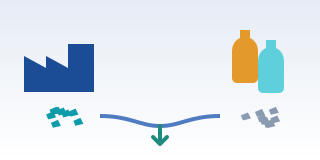
PIR vs PCR
ISO 14021 definitions, sources, contamination risk and how to state recycled content honestly.
Read more →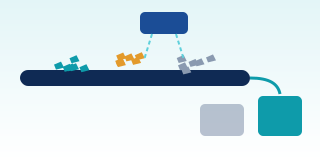
Sorting & preparation
Sorting by polymer, colour and contaminant; grinding, washing and float–sink before extrusion.
Read more →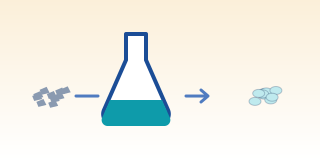
Formulation development
Replacing lost stabiliser, bonding mixed phases and setting targets from the part specification.
Read more →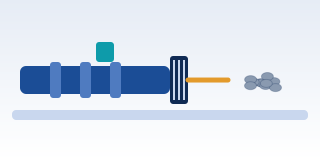
From flakes to pellets & lot QC
Degassing, melt filtration, pelletising, lot control and the properties checked on every lot.
Read more →
Standards & certification
ISO 14021, GRS / RCS, ISCC PLUS, EuCertPlast, EN 15343 and food-contact rules.
Read more →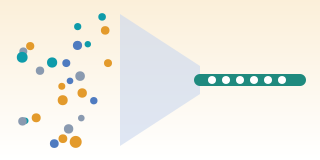
Common problems & fixes
Odour, gels, black specks, drifting MFI, off-colour: measurable causes and fixes, symptom by symptom.
Read more →New program · open to partner plants
From back-of-plant scrap to front-door feedstock
Converters that buy virgin resin on the open market send clean production scrap to ACS's Circular plant and get it back as recycled pellets, with weight and traceability records for ESG reporting. Terms agreed case by case.
How to join →FAQ
Frequently asked questions
Can recycled pellets replace virgin resin 100%?
It depends on the part and its specification. Parts with modest toughness needs and dark colours can often run a high recycled share. Parts that take impact, need a tight colour match or touch food usually need virgin resin in the blend or face regulatory limits. Start from the specification and the tests the part has to pass, then find the share that actually passes by trial.
Why does ACS make Circular grades in its own plant?
Recycled feedstock varies far more than virgin resin, so quality has to be controlled continuously from intake through blending and extrusion to lot release. Circular grades are therefore made in ACS's own plant (up to 3,000 t/year, being expanded). Other ACS products are made with a network of partner compounders to ACS-designed formulations.
What is the minimum order?
ACS has no minimum production quantity. Trial and production lot sizes are agreed per job, so you can test on your own machine before you commit.
Use more recycled content without losing the spec
Send us your part, current resin and target recycled share, or send samples of the recycled material you already have for a free review. Our technical team replies with observations and a trial plan. No obligation to buy.