Series · Plastics processing
Compression molding
place the material in a hot mould, close it, and let it cure
Electrical boxes, melamine tableware, SMC panels and rubber seals are made by one of the oldest processes in the plastics industry. This article covers the cycle, the variables that matter, how it compares with injection and transfer molding, and the defects you will meet.
Marketing Department, ADVANCEDCHEM SOLUTIONS CO., LTD. · 21 October 2026 · about 7 min read
The principle in one minute
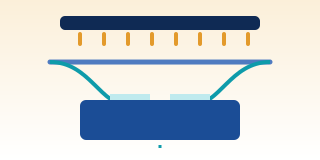
A weighed amount of material, the charge, is placed in the open cavity of a heated mould. A hydraulic press brings the upper mould half down, the pressure squeezes the material out to fill the cavity, and the pressure is held until the part has set. The mould then opens and the part is ejected.
"Set" means two different things depending on the material:
- Thermosets such as phenolic, melamine, UF and SMC/BMC: heat from the mould triggers a crosslinking reaction, the cure. The part becomes permanently rigid and cannot be remelted, so the mould stays hot throughout the cycle. Rubber follows the same logic (vulcanisation).
- Thermoplastics such as GMT and LFT with a PP matrix: the charge is preheated until molten and placed in a cooler mould. It flows to fill the cavity and then freezes. No chemical reaction is involved.
The production cycle
- Prepare the charge Weigh powder, granules or bulk material precisely. Some shops tablet powder into preforms and preheat them to cut cure time and the pressure needed. SMC sheets are cut and stacked to a pattern; GMT blanks are heated in an oven until molten.
- Load the charge Place it in the same position every time. The position and shape of the charge decide the flow pattern and where knit lines form.
- Close and press The press closes fast, then slows before touching the material. Pressure drives the material to fill the cavity, and the excess escapes at the parting line. Phenolic, melamine and UF jobs usually open the mould slightly for a moment (breathe) to vent gas before full pressure.
- Cure or cool Thermosets stay under pressure in the hot mould until the reaction reaches the required degree; thermoplastics stay under pressure in a cooler mould until they freeze. This step takes most of the cycle and grows with part thickness.
- Eject and finish Eject the part and remove flash by hand trimming, sanding, blasting or tumbling. Some thermoset parts are post-cured in an oven to complete the reaction.
Variables to control
| Variable | What it controls | What goes wrong if it is off |
|---|---|---|
| Charge weight | Just enough material to fill the cavity | Too little: short shots, porous parts · Too much: thick flash, oversize thickness |
| Mould temperature | Cure rate (thermoset) or cooling rate (thermoplastic) | Too low: undercure · Too high: material cures before filling, scorching or colour change |
| Closing speed | How long the material can flow before it starts to set | Too slow: pre-cure before fill · Too fast: trapped air, shock to inserts |
| Pressure | Complete fill and part density | Low: blisters, porosity, short shots · High: heavy flash, faster mould wear |
| Breathe timing | Venting of water and volatiles from the reaction | Too little: blisters · Too late: material starts to set, surface marks |
| Cure or cooling time | Degree of crosslinking, or stiffness at ejection | Too short: undercure, parts blister or warp after ejection · Too long: lost capacity with no benefit |
| Material moisture and age | Flowability of the compound | Old or warm-stored compound flows less; high moisture adds blisters |
Textbook reference: moulds for thermosets typically run at around 140–190 °C depending on the resin system and part thickness. Typical range — follow the TDS of your grade.
Parts and materials
| Material | Type | Typical parts |
|---|---|---|
| Phenolic (PF) | Thermoset | Electrical components, heat-resistant handles |
| Melamine (MF) | Thermoset | Melamine tableware: hard, glossy, decoratable |
| Urea formaldehyde (UF) | Thermoset | Sockets, switches, toilet seats |
| SMC / BMC (glass-reinforced polyester) | Thermoset | Sectional water-tank panels, vehicle body panels, electrical enclosures, meter covers |
| Rubber (NR, EPDM, NBR, etc.) | Elastomer (vulcanised) | Seals, gaskets, bumpers |
| GMT / LFT (glass-reinforced PP) | Thermoplastic | Automotive structural parts, underbody shields, large panels |
Compression molding has the edge with long fibres or high filler loadings: the material flows only a short way, fibres break less, and there is no runner to throw away. Thermoset compounds are not characterised by MFI the way thermoplastics are; each compound type has its own flow test.
Compared with injection and transfer molding
| Item | Compression | Transfer | Injection |
|---|---|---|---|
| Material feed | Charge placed in the open cavity | Charge in a heated pot, plunger forces it into a closed mould | Screw injects melt into a closed mould |
| Waste per cycle | Flash only | Cull in the pot and runners | Runners (unless hot runner) |
| Long fibres | Best preserved | Moderate | Most breakage |
| Inserts and complex detail | Limited | Good; suits encapsulating electronics | Best |
| Tooling cost (relative) | Low to medium | Medium | Medium to high |
| Speed and automation | Low to medium | Medium | High |
Common defects
Almost every compression molding defect is fixed through the charge, temperature, pressure and time, not through additives. Use this table as a starting point for root-cause work.
| Symptom | Likely causes | How to check | Does an additive help? |
|---|---|---|---|
| Blisters, porosity | Reaction gas or moisture cannot escape, too little breathing, undercure, air trapped by charge placement | Section the part to locate voids and compare with charge position; check material moisture | No. Preheat and dry the charge, adjust breathing, pressure and time |
| Incomplete fill (short) | Charge too light, material cures before filling because the press closes too slowly or the mould is too hot, aged compound | Weigh every charge while troubleshooting; check whether the short is at the point farthest from the charge | No. Fix charge weight and position, closing speed and temperature |
| Undercure | Cure time too short, uneven mould heating, part thicker than the time was set for | Surface hardness (Barcol is common for SMC/BMC), gloss, blistering after ejection, or residual heat of reaction by DSC | No. Fix time and temperature. For food-contact ware this must be controlled strictly to the product requirements |
| Heavy flash | Excess charge, worn parting line, insufficient clamp force, material too fluid | Measure flash thickness and weigh charges; inspect parting-line wear | No. Fix the charge and the mould |
| Warpage | Unequal mould-half temperatures, uneven fibre orientation, ejecting too early | Measure mould surface temperature at several points; trace flow direction from the charge position | In SMC, low-profile additives in the compound formulation control shrinkage; this is not a masterbatch added at the press |
Additives in this process
To be straightforward: ACS masterbatches are designed for thermoplastics, mainly PP and PE. Thermoset compression molding is a different formulation world. The compound already contains fillers (such as cellulose, glass fibre or minerals), the cure system, internal mould release and colour from the compound maker; nobody adds masterbatch pellets at the press.
- GMT/LFT with a PP matrix is where PP additive know-how applies directly, for example UV stabilisers for outdoor parts, colour and heat stabilisers. It has to be designed together with the GMT/LFT producer because it interacts with PP-to-glass adhesion. See UV solutions.
- When considering a switch from thermoset to thermoplastic, for example an electrical box moving from BMC to injection-moulded PP that must pass a flammability test, see FR PP solutions to understand the options and limits. A material change means re-testing heat, fire and mechanical performance from scratch.
- Rubber uses rubber-specific chemicals (vulcanisation systems, antidegradants) and is outside the scope of this article.
FAQ
Compression molding questions we hear often
How does compression molding differ from injection molding, and when should I use it?
Compression molding has no runner system and the material flows only a short distance, so long fibres break less, moulded-in stress is low and the mould is simpler. It suits large, fairly flat parts in thermosets or long-fibre materials. Injection molding is faster, easier to automate and handles complex detail better, so it suits high-volume thermoplastic parts.
Why does the mould need to breathe during pressing?
Phenolic, melamine and UF cure by a condensation reaction that releases water and other volatiles. Gas trapped in the part causes blisters or porosity. Opening the mould slightly for a short moment after first closing lets the gas escape before full pressure is applied. Timing and the number of breathes depend on the material and part thickness.
Can PP/PE masterbatch be used in thermoset compression molding?
Generally not. PP/PE masterbatch uses a thermoplastic carrier, which does not take part in the thermoset cure and can create weak spots in the part. Thermoset compounds arrive already formulated with fillers, colour and cure system from the compound maker. Compression molding where PP-type masterbatch can apply is GMT/LFT with a PP matrix.
What is the difference between compression molding and transfer molding?
In compression molding the charge is placed directly in the mould cavity and the mould closes on it. In transfer molding the charge is placed in a heated pot and a plunger forces it through channels into an already closed mould. Transfer suits parts with inserts or encapsulated electronics and gives less flash, but leaves a cull in the pot and runners every cycle.
Technical caution
Let-down ratios and technical data on this page are typical reference values, not a guarantee of properties. Confirm by trial in your own process before production use.